
Vitamin
Choline
It was assumed for decades that the body made enough of its own. It does make some — just not enough — and most adults take in less than the recommendation, which was only published in 1998.
What it does
Choline is the head group of phosphatidylcholine, which is the main phospholipid in every cell membrane you have. Structurally it is one of the materials the body is built from rather than a catalyst.
It is also the precursor of acetylcholine, the neurotransmitter of memory, attention and every voluntary muscle contraction.
And it is needed to export fat from the liver as VLDL. Without enough, fat accumulates there — choline deficiency reliably produces fatty liver in controlled studies, which is how the requirement was established in the first place.
How much you need
| Who | Per day | Note |
|---|---|---|
| Infants, 0–6 months | 125 mg | Adequate Intake |
| Infants, 7–12 months | 150 mg | Adequate Intake |
| Children, 1–3 years | 200 mg | — |
| Children, 4–8 years | 250 mg | — |
| Children, 9–13 years | 375 mg | — |
| Men, 14 and over | 550 mg | — |
| Women, 14 and over | 400 mg | — |
| Pregnancy | 450 mg | — |
| Breastfeeding | 550 mg | — |
All Adequate Intakes. Most national surveys find average intake well below them, particularly in people who do not eat eggs — and requirements in pregnancy are higher because the foetal brain draws heavily on maternal supply.
From our own data
The foods highest in choline
Egg yolk and liver dominate. Beyond them, meat, fish, soy, cruciferous vegetables and beans contribute, but nothing comes close to the first two.
- 1
 Egg yolk, raw149% · DV
 - 2
 Beef kidney, simmered93% · DV
 - 3
 Chicken liver, pan-fried59% · DV
 - 4
 Liver sausage47% · DV
 - 5
 Soy flour, low-fat35% · DV
 - 6
 Wheat germ32% · DV
 - 7
 Turkey giblets, raw29% · DV
 - 8
 Veal escalope, grilled29% · DV
 - 9
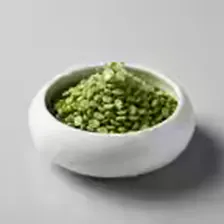 Split peas, dry29% · DV
 - 10
 Pork jerky26% · DV
 - 11
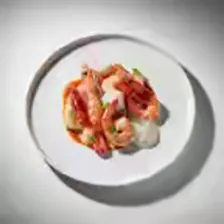 Prawns, cooked25% · DV
 - 12
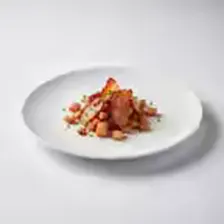 Bacon bits25% · DV
Per 100 g, from our copy of USDA FoodData Central, against a Daily Value of 550mg. Ranked by amount, not by how much of it your body actually takes up — read the next section before you act on the order.
The table above is per 100 g. The app weighs the portion you actually ate.
What helps, and what gets in the way
Helps
- Eating whole eggs rather than whites — essentially all the choline is in the yolk
- Liver, occasionally, which is the densest source there is
- Soy, cruciferous vegetables and beans for people who avoid both
Gets in the way
- Discarding yolks, which removes almost all of the choline from an egg
- Low folate intake, since the two pathways partly substitute for each other
- Certain genetic variants that raise individual requirement substantially
Gut bacteria convert some dietary choline into TMAO, a compound associated in observational studies with cardiovascular risk. The evidence is not settled and does not currently support avoiding choline-rich foods — but it is why you will see the topic argued about, and why "more is better" is not the conclusion to draw.
Who tends to fall short
Groups where intake or absorption is commonly lower than the reference. It is a list of populations, not a list of symptoms — it cannot tell you anything about yourself.
- People who avoid eggs and organ meats
- Pregnant women, whose requirement rises and whose intake often does not
- Postmenopausal women, who lose the oestrogen-driven boost to internal synthesis
- People with certain common genetic variants in the synthesis pathway
Cook it
Shakshuka with whole eggs
Two, twenty-five minutes
Ingredients
- 4 eggs
- 1 tin chopped tomatoes
- 1 red pepper, sliced
- 1 onion, sliced
- 2 cloves garlic
- 1 tsp cumin
- 1 tsp paprika
- 2 tbsp olive oil
- Parsley or coriander
Method
- 1Cook the base down properlyOnion and pepper for ten minutes, then tomatoes for another ten until thick enough that a spoon leaves a trail. A watery base will not hold the eggs where you put them.
- 2Make wellsPress four hollows with the back of a spoon and crack an egg into each. Whole eggs — the yolk is where essentially all the choline is.
- 3Lid on, heat lowSix to eight minutes. You want the whites set and the yolks still soft; the lid cooks the tops without overcooking the bottoms.
- 4Herbs at the tableScattered on after it comes off the heat, so they stay green.
Four yolks between two people covers a substantial share of a day’s choline, which is difficult to do any other way without eating liver.
Sources
- NIH Office of Dietary Supplements — Choline
- Dietary Reference Intakes for Thiamin, Riboflavin, Niacin, Vitamin B6, Folate, Vitamin B12 and Choline
- USDA FoodData Central
This page is education, not medical advice. It does not diagnose anything and it is not a substitute for a clinician who knows your history. If you think you are short of choline, the answer is a blood test and a conversation, not a supplement bought on the strength of an article.
Every food above, and 12,601 more, with the full panel — in the app.