
Vitamin
Vitamin A
Retinol from animal food and carotenoids from plants are both called vitamin A, and they behave nothing alike. One accumulates and can reach toxic levels; the other is converted only as needed and essentially cannot.
What it does
The classic role is vision. Retinal, a form of vitamin A, binds to a protein in the retina to make rhodopsin, and rhodopsin is what changes shape when a photon hits it. Night blindness is the earliest functional sign of deficiency for exactly this reason, and globally vitamin A deficiency remains a leading cause of preventable childhood blindness.
Less famously, it regulates gene expression. Retinoic acid binds receptors in the nucleus and switches on genes that control how epithelial cells differentiate — skin, gut lining, the airways. This is why deficiency shows up as dry skin and repeated infection as much as it shows up in the eye.
It is also required for immune cell development and for normal foetal development, which is the source of both its importance and its hazard in pregnancy.
How much you need
| Who | Per day | Note |
|---|---|---|
| Infants, 0–6 months | 400 µg RAE | Adequate Intake |
| Infants, 7–12 months | 500 µg RAE | Adequate Intake |
| Children, 1–3 years | 300 µg RAE | — |
| Children, 4–8 years | 400 µg RAE | — |
| Children, 9–13 years | 600 µg RAE | — |
| Men, 14 and over | 900 µg RAE | — |
| Women, 14 and over | 700 µg RAE | — |
| Pregnancy | 750–770 µg RAE | — |
| Breastfeeding | 1,200–1,300 µg RAE | — |
| Upper limit, adults | 3,000 µg | Preformed retinol only — carotenoids are not counted |
RAE means retinol activity equivalents, which is the unit that makes retinol and carotenoids comparable: 1 µg RAE is 1 µg of retinol, or 12 µg of beta-carotene. Older sources use International Units and some use "IU" and "RE" interchangeably, which they are not. If a label gives IU, the conversion depends on the form.
From our own data
The foods highest in vitamin a
Liver is at the top by a distance that makes the rest of the list look flat, and that is the practical warning as much as the finding. Below it, orange and dark green vegetables carry carotenoids, which the body converts as it needs them.
- 1
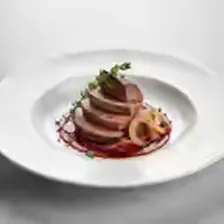 Veal liver, braised2,349% · DV
 - 2
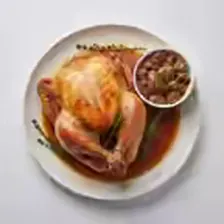 Turkey giblets, simmered513% · DV
 - 3
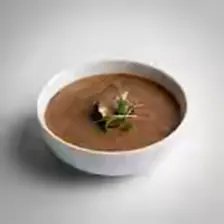 Truffle-flavoured pâté501% · DV
 - 4
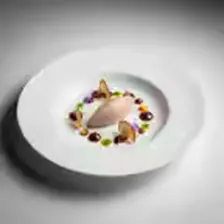 Liver sausage469% · DV
 - 5
 Vine leaves, raw153% · DV
 - 6
 Sweet potato, baked116% · DV
 - 7
 Eel, raw116% · DV
 - 8
 Carrot juice106% · DV
 - 9
 Ghee (clarified butter)95% · DV
 - 10
 Pumpkin, canned86% · DV
 - 11
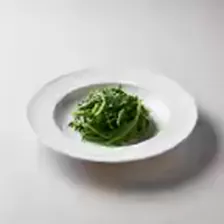 Dandelion greens, boiled and salted81% · DV
 - 12
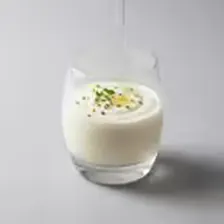 Garlic sauce76% · DV
Per 100 g, from our copy of USDA FoodData Central, against a Daily Value of 900µg. Ranked by amount, not by how much of it your body actually takes up — read the next section before you act on the order.
The table above is per 100 g. The app weighs the portion you actually ate.
What helps, and what gets in the way
Helps
- Fat in the same meal — both forms are fat-soluble and a fat-free salad absorbs little
- Cooking and chopping vegetables, which breaks cell walls and releases carotenoids
- Adequate zinc, which is needed to mobilise vitamin A from liver stores
Gets in the way
- Very low-fat diets
- Fat malabsorption — coeliac disease, pancreatic insufficiency, cystic fibrosis
- Zinc deficiency, which can produce functional vitamin A deficiency despite adequate intake
The asymmetry is the thing to remember. Preformed retinol is absorbed at 70–90% and stored in the liver, so excess accumulates: chronic high intake causes headaches, liver damage and bone loss, and high intake in early pregnancy is teratogenic. Beta-carotene is absorbed far less efficiently and converted only as required — eat enough carrots to turn your palms orange and you have caused a cosmetic effect, not a toxicity.
Who tends to fall short
Groups where intake or absorption is commonly lower than the reference. It is a list of populations, not a list of symptoms — it cannot tell you anything about yourself.
- Populations relying on staple grains with few vegetables or animal foods
- People with fat malabsorption of any cause
- Premature infants, who are born with small stores
- People with severe liver disease, where storage and release both fail
Cook it
Roast carrot and sweet potato soup
Four, about forty-five minutes
Ingredients
- 500 g carrots, halved lengthways
- 400 g sweet potato, cubed
- 1 onion, quartered
- 3 tbsp olive oil
- 1 tsp ground cumin
- 900 ml stock
- 2 tbsp full-fat yoghurt or cream, to serve
Method
- 1Roast rather than boil200°C, 35 minutes, until the edges have caught. Roasting concentrates the sugars and the flavour; boiling dilutes both into water you will then have to season back.
- 2Use the oil generouslyThree tablespoons sounds like a lot for vegetables. Carotenoids are fat-soluble and a fat-free version of this soup delivers a fraction of the vitamin A.
- 3Toast the cuminThirty seconds in the dry pan before it goes near liquid. Ground spice added to stock tastes dusty; the same spice bloomed in heat does not.
- 4Blend and finishStock in, ten minutes at a simmer, then blend smooth. A spoon of yoghurt at the table is not only decoration — the fat helps absorption too.
This recipe uses carotenoids rather than retinol deliberately. If you are pregnant, liver and high-dose retinol supplements are the forms to avoid; orange vegetables are not.
Sources
- NIH Office of Dietary Supplements — Vitamin A
- Dietary Reference Intakes for Vitamin A, Vitamin K, Iron, Zinc and others
- USDA FoodData Central
This page is education, not medical advice. It does not diagnose anything and it is not a substitute for a clinician who knows your history. If you think you are short of vitamin a, the answer is a blood test and a conversation, not a supplement bought on the strength of an article.
Every food above, and 12,601 more, with the full panel — in the app.