
Vitamin
Vitamin D
Almost every other nutrient comes from food. This one is made in your skin from sunlight, which is why the advice about it changes with latitude, season and how much of the year you spend indoors.
What it does
Vitamin D governs how much calcium you absorb from what you eat. Without enough, you can have a calcium-rich diet and still not get the calcium into your bones — which is what rickets in children and osteomalacia in adults actually are.
It behaves more like a hormone than a vitamin. Your skin makes it from UVB light, your liver and then your kidneys convert it into the active form, and receptors for it turn up in tissue that has nothing obvious to do with bone: immune cells, muscle, gut lining.
Because it is fat-soluble, it is stored rather than flushed. That is useful over a winter and it is also why vitamin D is one of the few nutrients where supplementing carelessly can actually harm you.
How much you need
| Who | Per day | Note |
|---|---|---|
| Infants, 0–12 months | 10 µg (400 IU) | Adequate Intake |
| Children and adults, 1–70 | 15 µg (600 IU) | — |
| Adults, 71 and over | 20 µg (800 IU) | — |
| Pregnancy and breastfeeding | 15 µg (600 IU) | — |
Micrograms and International Units are both in common use and 1 µg = 40 IU, which is a frequent source of confusion on labels. These figures assume minimal sun exposure — they are deliberately set for the worst case, because the alternative is advice that only works in July.
From our own data
The foods highest in vitamin d
This is the shortest genuinely useful list on the site, and that is the finding. Outside oily fish, egg yolk and things that have been fortified on purpose, food is not where vitamin D comes from.
- 1
 Chestnut mushrooms, UV-treated, raw160% · DV
 - 2
 Greenland halibut, raw137% · DV
 - 3
 Sockeye salmon, canned, drained108% · DV
 - 4
 Eel nigiri40% · DV
 - 5
 Processed cheese blend32% · DV
 - 6
 Egg yolk, pasteurised30% · DV
 - 7
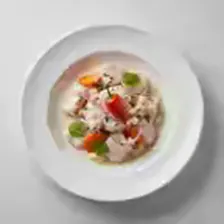 Ceviche26% · DV
 - 8
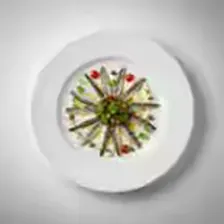 Anchovies20% · DV
 - 9
 Ghee (clarified butter)14% · DV
 - 10
 Pork spare ribs, braised13% · DV
 - 11
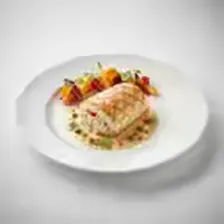 Flounder with crab stuffing12% · DV
 - 12
 Soy-based nutrition shake12% · DV
Per 100 g, from our copy of USDA FoodData Central, against a Daily Value of 20µg. Ranked by amount, not by how much of it your body actually takes up — read the next section before you act on the order.
The table above is per 100 g. The app weighs the portion you actually ate.
What helps, and what gets in the way
Helps
- Eating it with fat, since it is fat-soluble and a fat-free meal absorbs less
- Sunlight on skin — midday, arms and face, and far less time than most people assume
- Fortified foods, which in many countries are the main dietary source by a wide margin
Gets in the way
- Latitude and season: above roughly 37°, winter sunlight makes almost none
- Sunscreen, glass and clothing, all of which block UVB
- Darker skin, which needs longer exposure for the same amount
- Age, which reduces how efficiently skin makes it
Who tends to fall short
Groups where intake or absorption is commonly lower than the reference. It is a list of populations, not a list of symptoms — it cannot tell you anything about yourself.
- Breastfed infants, which is why supplementation is routinely recommended for them
- People who cover up, work indoors, or live at northern latitudes through winter
- People with darker skin living far from the equator
- Older adults, through less time outdoors and less efficient synthesis
- People with fat malabsorption — coeliac disease, Crohn’s, after bariatric surgery
Cook it
Salmon and sweet potato mash
From 7 months; one of the few meals that is a real dietary source
Ingredients
- 40 g salmon fillet, skin and bones removed with care
- 1 small sweet potato, peeled and cubed
- 1 tsp olive oil or unsalted butter
- 2–3 tbsp warm water, breast milk or formula
Method
- 1Check the fish twiceRun a finger across the fillet both ways. Pin bones are fine, sharp and easy to miss, and this is the step not to hurry.
- 2Steam togetherSweet potato for 12 minutes, then the salmon on top for a further 6–8 until it flakes. Steaming rather than boiling keeps the fat — and the vitamin D dissolved in it — in the food instead of in the water.
- 3Flake and check againBreak the salmon apart with a fork and look through it once more for bones.
- 4MashMash the sweet potato with the oil, fold the salmon through, and loosen to the texture your baby manages. Serve warm, not hot.
Oily fish is on most first-foods lists from around six months, and is also a common allergen — introduce it on its own, early in the day. Official advice limits oily fish to a couple of portions a week for young children. Ask your paediatrician first.
Sources
- NIH Office of Dietary Supplements — Vitamin D
- Dietary Reference Intakes for Calcium and Vitamin D
- USDA FoodData Central
This page is education, not medical advice. It does not diagnose anything and it is not a substitute for a clinician who knows your history. If you think you are short of vitamin d, the answer is a blood test and a conversation, not a supplement bought on the strength of an article.
Every food above, and 12,601 more, with the full panel — in the app.